java Main 2 0:
java Main 2.5 0:
java Main 3 0:
java Main 3.30373 1.0:
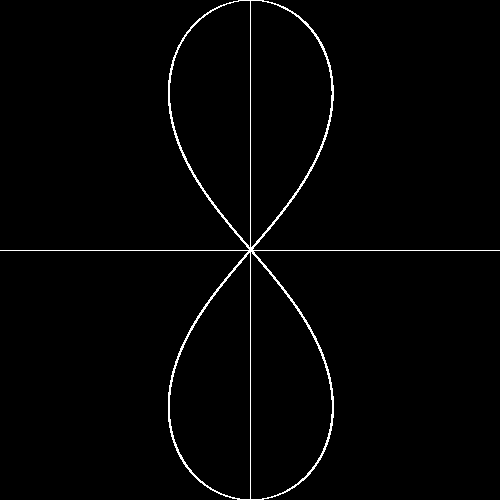
Alas not a lemniscate!!
java Main 3.5 1.7:
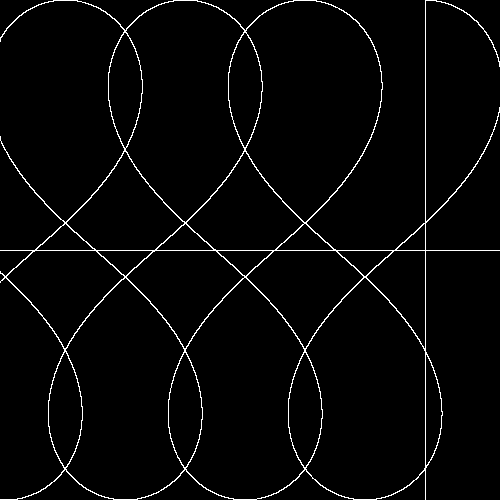
java Main 3.9 1.7:
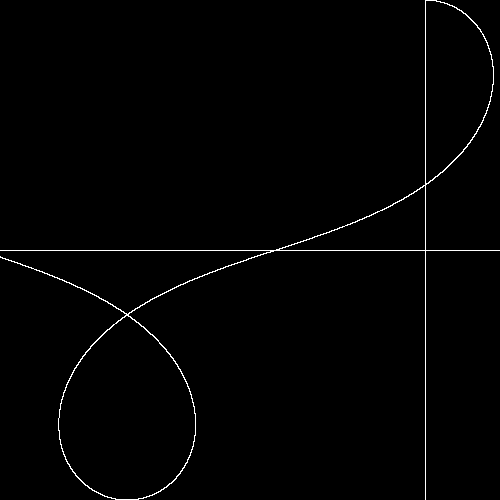
java Main 4.0 1.7:
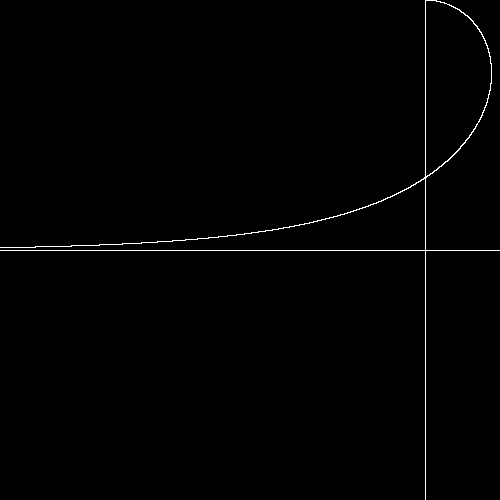
Alas not a Folium
java Main 4.2 1.7:
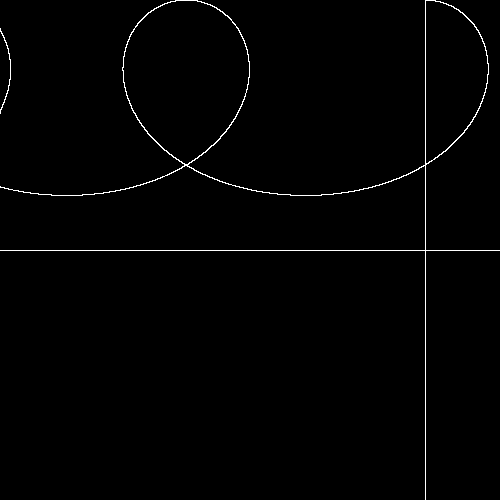
java Main 4.4 1.7:
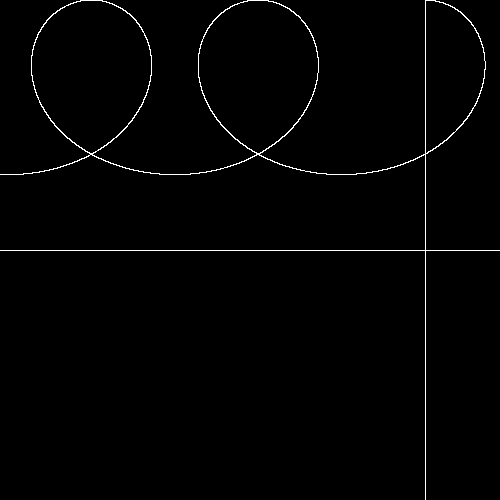
java Main 5 1.7:
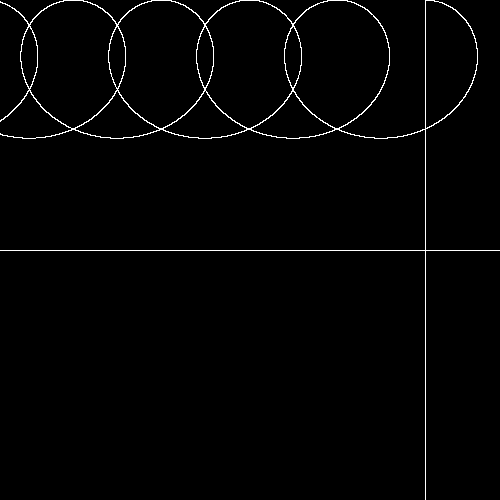
Consider a thin beam bent in 2 dimensions so that the torque at a point is proportional to its curvature, which is the commonest assumption. We assume that the beam is at rest and in equilibrium, perhaps unstable. In a plane, the torque is a linear function of the position and we assume here that the curvature at point <x, y> is Ty where T is an elastic parameter that is constant along the beam in these calculations. We normalize by assuming that the curve passes thru <0, 1> parallel to the X axis there. What is the shape of this curve?
It is easy to compute the curve if we take its arc length, τ, as the independent variable and consider x, y and α as dependent variables. α is the angle, measured counter-clockwise from the positive X direction, in radians, of the tangent to the curve. The initial conditions are
java Main 1 0:
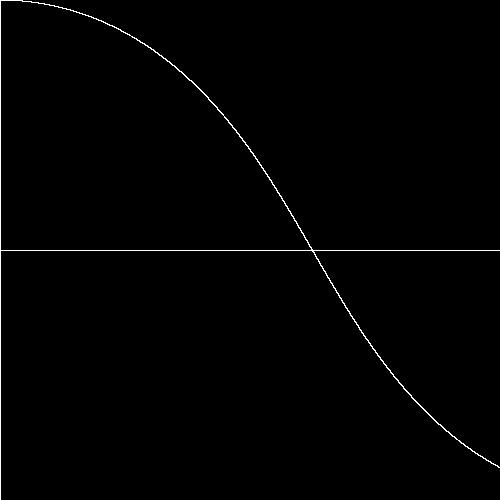
java Main 2 0:
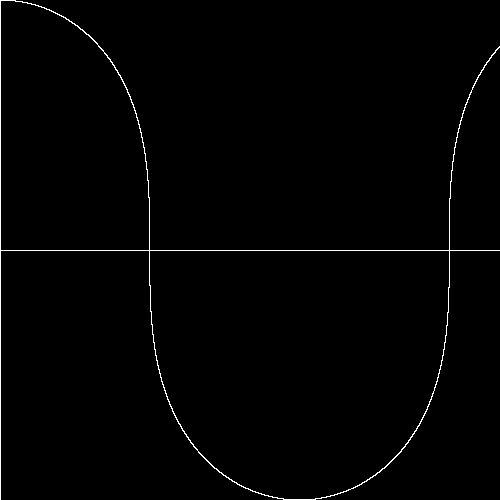
java Main 2.5 0:
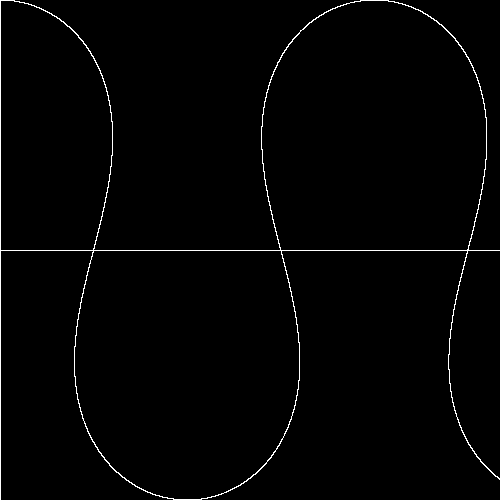
java Main 3 0:
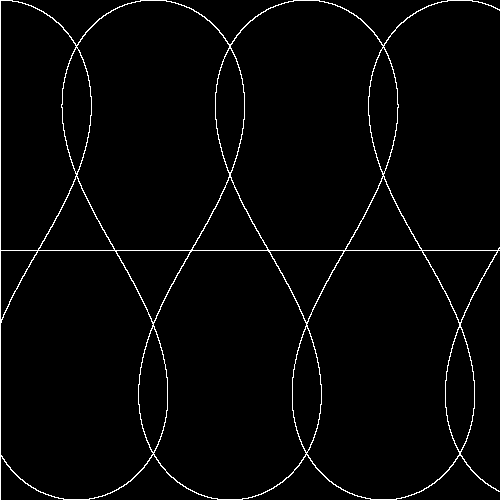
java Main 3.30373 1.0:
Alas not a lemniscate!!
java Main 3.5 1.7:
java Main 3.9 1.7:
java Main 4.0 1.7:
Alas not a Folium
java Main 4.2 1.7:
java Main 4.4 1.7:
java Main 5 1.7:
In this family of curves there is a close mimic of the Folium of Descartes rotated by π/4 when T = 4, but it is not the same. When T is about 3.30373 it is nearly, but not quite a lemniscate.
For negative values of T we get a rescaled reprise of the curves from T > 4. These curves bounded away from the X axis—indeed y ≥ 1.